School Program Vertical Flyer: A Practical Guide to Choosing the Right Template
When launching a new educational initiative, the first impression often comes down to a single piece of paper or a digital image. A well-crafted School Program Vertical Flyer does more than just announce dates; it communicates trust, professionalism, and excitement. For educators, marketing teams, and small business owners in the education sector, selecting the right design asset is a critical step that many rush through with regrettable results. The goal is not merely to fill space with text but to create a visual narrative that captures attention and drives enrollment.
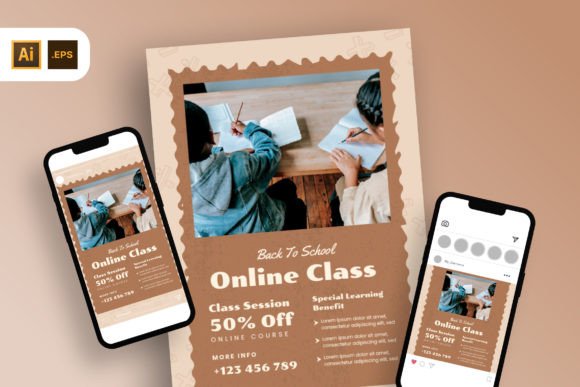
Many creators assume that any template labeled "school" will suffice. This is a common misconception that leads to generic, forgettable materials. A truly effective flyer for an online class or a summer course requires specific structural elements, such as a vertical layout that guides the eye naturally from the headline to the call to action. It needs room for high-quality photography and distinct sections for session details. When you overlook these nuances, your message gets lost in the noise of other advertisements.
The Hidden Pitfalls of Generic Design Templates
One of the most frequent mistakes professionals make is downloading low-resolution files that look sharp on a screen but turn into blurry disasters when printed. If you are planning to distribute physical brochures at community centers or open houses, a 72dpi image is insufficient. You need a file that supports 300dpi printing standards to ensure crisp lines and vibrant colors. Without this, your investment in professional printing goes to waste, and the final product appears amateurish.
Another overlooked detail is the flexibility of the design. Many templates come as flattened images where the text is baked into the background. This creates a significant bottleneck when you need to update a date, change a price, or swap out a photo. If you cannot edit the text, shapes, and colors easily, you are forced to hire a designer for every minor tweak, which increases costs and slows down your workflow. Always verify that the graphics are 100% vector based. Vector formats like AI, EPS, and SVG allow you to scale the design to any size without losing quality, ensuring your brochure looks perfect whether it's a small social media post or a large poster.
Why Style Matters: Retro Elements and Modern Needs
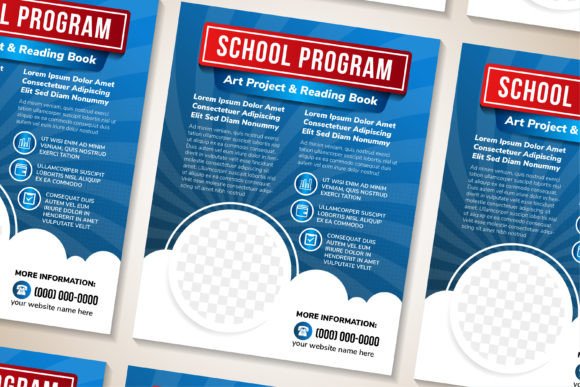
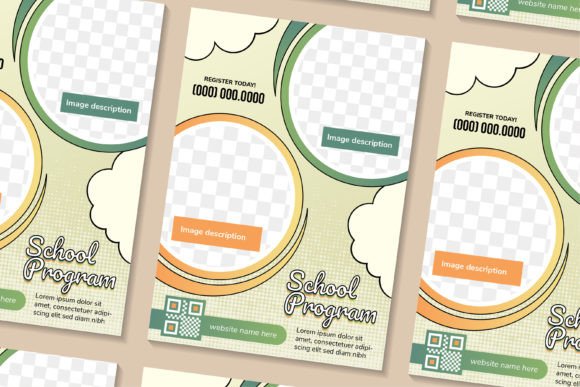
In the crowded field of educational marketing, standing out is essential. A School Program Vertical Flyer that utilizes a retro style with dot halftone patterns and cloud elements offers a unique aesthetic that appeals to both parents and students. This approach blends nostalgia with modern clarity, creating a sense of warmth and creativity that standard corporate templates lack. However, applying these styles incorrectly can lead to cluttered designs that confuse the reader.
The mistake here is often over-decoration. While the halftone pattern adds texture, it should not interfere with the readability of the course description. Similarly, cloud elements should frame the content, not obscure it. A balanced design ensures that the key information—such as the schedule, location, and contact details—remains the focal point. When the style fights the function, the communication breaks down. The best templates provide a structured layout where these artistic elements enhance the message rather than competing with it.
Evaluating Your Download Before You Commit
Before purchasing or downloading a template, take a moment to inspect the file organization. A well-organized file structure saves hours of frustration later. Look for layers that are clearly named and grouped logically. This allows you to navigate the document quickly, finding the specific section you need to edit without accidentally moving unrelated elements. If the file is a mess of ungrouped objects and unnamed layers, it is a red flag indicating poor preparation by the creator.
Consider the versatility of the included formats. A comprehensive package should include Ai, EPS, JPG, and SVG files. The vector formats (AI, EPS, SVG) are crucial for editing and high-quality printing, while the JPG serves as a quick preview or for web use. Having all these options ensures that the template fits into various stages of your marketing campaign, from initial brainstorming to final production. Relying on a single format limits your ability to adapt the design for different platforms, such as a digital email blast versus a physical handout.
Practical Steps for Effective Customization
To get the most out of a School Program Vertical Flyer, start by gathering your content before opening the design software. Have your session descriptions, photos, and contact information ready. This prevents the temptation to use placeholder text that might remain in the final version due to oversight. When inserting your own images, ensure they match the resolution requirements of the template. A high-resolution photo placed in a designated space will anchor the design, making it feel cohesive and professional.
Pay close attention to color consistency. Even if the template features a vibrant palette with greens, oranges, and gradients, ensure these colors align with your institution's branding. Changing the color scheme is easy with editable shapes, but doing so thoughtfully maintains brand recognition. Do not simply accept the default colors if they clash with your logo or website. A consistent visual identity builds trust with your audience, signaling that your program is organized and reliable.
Maximizing Impact Through Strategic Layout
The vertical layout of a poster or flyer is specifically designed for reading flow. It mimics the way we scan information from top to bottom. Use this to your advantage by placing the most compelling headline at the very top, followed by the secondary benefit or course title. The middle section should house the detailed session information and the featured photo, while the bottom should contain the clear call to action and contact details. Disrupting this natural flow by scattering information randomly reduces the efficiency of your communication.
Remember that white space—or negative space—is a powerful tool. Do not feel compelled to fill every inch of the flyer with text or graphics. Allowing the design to breathe makes the important information stand out. In a retro-style template with busy patterns like dots and clouds, ample spacing becomes even more critical to prevent visual fatigue. A clean, organized layout invites the viewer to engage with the content, whereas a cluttered one pushes them away.
Choosing the right School Program Vertical Flyer is about balancing aesthetics with functionality. By avoiding low-resolution traps, ensuring full editability, and respecting the principles of good layout, you can create marketing materials that truly represent the quality of your educational offerings. Whether you are promoting a college course, a children's activity, or an annual catalog, the foundation of your success lies in a design that is as practical as it is beautiful. Take the time to evaluate your options carefully, and you will see a marked improvement in engagement and satisfaction.