School Program Vertical Banner: A Guide to Professional Educational Design
Creating a compelling visual identity for an educational initiative often hinges on one critical element: the vertical layout. When educators, marketing managers, or small business owners need to announce a new school program, art project, or reading book series, they frequently turn to a School Program Vertical Banner. This format is not merely a placeholder for text; it is a strategic communication tool designed to capture attention in crowded environments, from library hallways to digital social media feeds. However, selecting the right design template is rarely as simple as picking a colorful image. The difference between a banner that drives engagement and one that gets ignored often lies in the technical quality, scalability, and adaptability of the underlying graphics.
The Importance of Vector Quality and Resolution
One of the most common mistakes I see creators make is prioritizing immediate visual appeal over file integrity. Many users download low-resolution images because they look "good enough" on a screen, only to discover later that the design pixelates when printed. For any professional application, especially in education where materials are often reproduced on large formats like posters or brochures, this is a costly error. A high-quality School Program Vertical Banner must be built on a foundation of 100% vector graphics. Unlike raster images (such as standard JPGs), vector files use mathematical equations to define shapes, lines, and curves. This means you can scale the design from a small mobile screen to a massive billboard without losing a single pixel of clarity.
When evaluating a template, always check if the file includes editable vectors in formats like AI or EPS. If a design relies heavily on flattened images with a resolution lower than 300dpi, you risk blurring your clouds, light shines, or dot circle patterns once printed. This lack of sharpness undermines the professionalism of your entire program. By choosing a template that guarantees high resolutions and vector elements, you ensure that every abstract shape and gradient remains crisp, regardless of the final output size.
Avoiding the Trap of Rigid Layouts
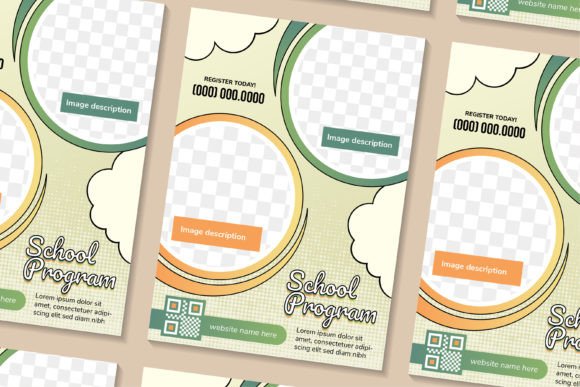
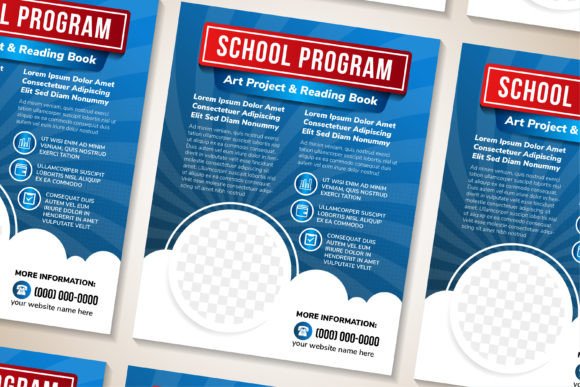
Another frequent oversight involves the flexibility of the design. A template might feature a beautiful sky background with halftone dots and vibrant red and blue gradients, but if the text layers are locked or merged into the background, it becomes useless for your specific needs. You might find yourself struggling to fit a long course title or update a date without hiring a graphic designer to fix it.
The best approach is to select a well-organized file where text, shapes, and colors are fully editable. Imagine you are launching a tutoring session flyer next month. You need to swap out the photo space, change the color scheme to match your school's branding, and adjust the typography. If the template is not structured correctly, these simple tasks become time-consuming hurdles. Look for resources that explicitly state they include organized layers. This allows you to customize the abstract elements, such as the dot circles or cloud illustrations, to better suit your specific message without breaking the overall composition.
Understanding the Versatility of Your Assets
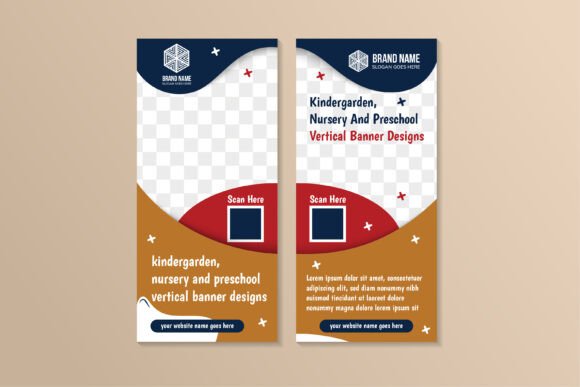
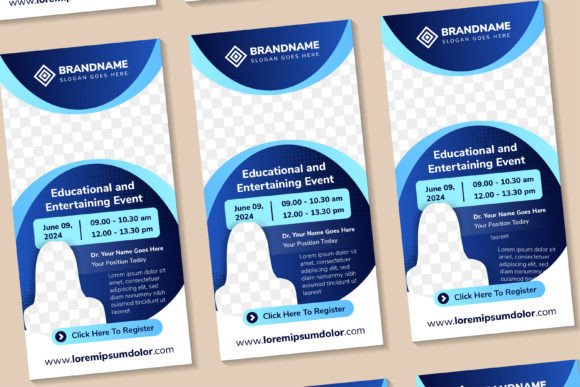
Many buyers underestimate how far a single design can stretch. A versatile School Program Vertical Banner is not just for a single poster. With the right file formats—including SVG, EPS, and high-res JPG—you can repurpose the same assets across multiple channels. You might use the vertical layout for an Instagram story, the horizontal crop for a website header, and the individual elements for a catalog cover or an annual report.
Consider the semantic value of the imagery included. Elements like books, light rays, and open spaces convey concepts of creativity, learning, and growth. These are universal symbols in the education sector. However, simply having these elements isn't enough; they must be integrated logically. A chaotic arrangement of icons can confuse the viewer. A well-designed template balances these illustration components with negative space, ensuring the primary information—such as the course name or event date—remains the focal point. This balance is crucial for effective advertising and communication.
Practical Steps Before You Download
Before committing to a purchase or download, take a moment to verify the deliverables against your specific workflow. Do you have the software required to edit the source files? If you do not own Adobe Illustrator, an AI file might be less useful unless the provider also offers an InDesign-compatible version or a robust PDF. Always ensure the package includes a variety of formats. Having access to both vector files for editing and raster files for quick previews gives you the best of both worlds.
Furthermore, assess the color profile. Designs intended for print should ideally be in CMYK mode, while those for web should be RGB. Some templates provide both, but others may default to one, requiring manual conversion that can sometimes shift colors unexpectedly. Checking these details beforehand saves hours of frustration and ensures your final product looks exactly as intended.
Maximizing Impact with Customization
Once you have secured a high-quality template, the real work begins with customization. Don't settle for the default text or stock photos. Replace the placeholder images with authentic photos of your students or teachers. Authenticity builds trust. Use the editable color swatches to align the design with your institution's brand guidelines. If the template features a modern gradient or a specific halftone pattern, consider how these interact with your logo. Sometimes, slightly adjusting the opacity of a background element can make your text pop significantly more.
Remember that the goal of a School Program Vertical Banner is to inform and inspire. Whether you are promoting a summer reading club, an art workshop, or an online class, the design should reflect the energy and excitement of the activity. A clean, organized layout with clear calls to action will always outperform a cluttered, generic design. By avoiding the pitfalls of low resolution and rigid structures, you empower yourself to create professional, impactful materials that truly represent the value of your educational offerings.