Revitalizing Childhood: The Power of Summer Outdoor Nature Education
In an era where digital screens often dominate a child's daily routine, the concept of summer outdoor nature education has emerged as a vital counterbalance. It is more than just a vacation activity; it is a structured approach to learning that leverages the natural world as a classroom. From the vibrant imagery of a science boy summer outdoor nature education kid character exploring a forest to the practical realities of field trips, this educational philosophy is reshaping how we view childhood development. By stepping away from the four walls of a traditional school and into the open air, children gain a unique perspective on science, ecology, and their place within the environment.
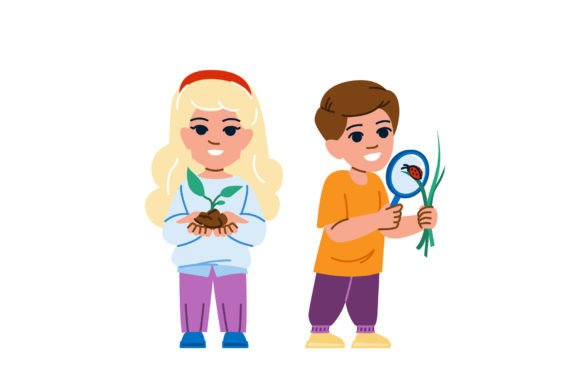
The visual representation of this movement often features flat cartoon illustrations of happy children interacting with flora and fauna. These images are not merely decorative; they symbolize a shift in pedagogical focus. They represent a return to hands-on discovery, where the people flat cartoon illustration style reflects simplicity, joy, and accessibility. This article explores the depth of this educational approach, its significance for modern youth, and how it integrates into our broader understanding of learning and creativity.
Defining the Landscape of Outdoor Learning
At its core, summer outdoor nature education is an experiential learning method. Unlike rote memorization in a textbook, this approach encourages students to observe, question, and interact with their surroundings. When we visualize a children environment designed for learning, we see streams, forests, gardens, and parks transforming into dynamic laboratories. The "kid vector" or character archetype often seen in educational materials—a curious boy with a magnifying glass or a girl planting seeds—embodies the spirit of inquiry that drives this movement.
This form of education is distinct from simple playtime. While play is essential, outdoor nature education involves guided objectives. It might involve identifying local bird species, understanding the water cycle by observing rain puddles, or studying soil composition. The childhood school experience is thus extended beyond the academic calendar, utilizing the long days of summer to deepen scientific literacy and environmental stewardship.
The Role of Visuals in Modern Education
Why do we see so many flat cartoon illustrations associated with this topic? In the realm of educational marketing and curriculum design, visuals serve as powerful cognitive tools. A well-designed vector image of a child in nature can instantly communicate safety, fun, and engagement to parents and educators. These graphics strip away complex details to highlight the essence of the experience: connection. Whether it is a science boy summer outdoor nature education kid character or a group of diverse children planting trees, these images help demystify the outdoors, making it appear inviting rather than intimidating.
Furthermore, these visual aids are often used in lesson plans to set expectations. Before a child steps outside, seeing a simplified illustration of what they will do helps reduce anxiety and builds anticipation. It bridges the gap between the abstract concept of "nature study" and the concrete reality of holding a leaf or digging in the dirt.
The Significance of Reconnecting with Nature
The relevance of outdoor education has never been higher. As urbanization increases, many children suffer from "nature deficit disorder," a term coined to describe the behavioral problems resulting from limited time spent outdoors. Summer outdoor programs address this by providing structured opportunities for immersion. The benefits are multifaceted, touching upon physical health, mental well-being, and cognitive development.
- Cognitive Growth: Navigating uneven terrain, tracking insects, or building shelters requires problem-solving skills that are rarely tested in a seated classroom. The brain engages differently when the environment is unpredictable and rich with sensory input.
- Emotional Resilience: Nature provides a calming backdrop that reduces stress. For children facing academic pressure, the freedom of the outdoors offers a necessary release, fostering emotional regulation and confidence.
- Scientific Curiosity: Direct observation sparks questions. Why does the moss grow on one side of the tree? How do ants communicate? These real-world inquiries lay the foundation for a lifelong interest in science and biology.
Consider the example of a typical summer camp focused on ecology. Instead of reading about photosynthesis, children measure the growth of plants over several weeks, record data in journals, and present their findings. This active participation transforms them from passive recipients of information into active researchers. The people flat cartoon illustration of a child looking through a microscope at a pond sample captures this exact moment of discovery.
Integrating Nature Education into Modern Life and Business
The principles of outdoor nature education extend beyond the playground. In the modern business and technology sectors, there is a growing recognition of the value of "green thinking." Companies are increasingly investing in sustainability, and the next generation of leaders needs to understand the environment intuitively. By fostering an early appreciation for nature, we are cultivating a workforce that values ecological balance.
Technology and the Outdoors: A Symbiotic Relationship
A common misunderstanding is that outdoor education rejects technology. On the contrary, modern nature programs often integrate tech tools to enhance learning. Children might use tablets to identify plant species via augmented reality apps, use GPS devices to map trails, or employ sensors to monitor air quality. The science boy summer outdoor nature education kid character of today is just as likely to be holding a tablet as a compass.
This integration teaches children that technology is a tool for understanding the world, not just a source of entertainment. It prepares them for future careers in environmental engineering, data science, and conservation, where technical skills must be applied to real-world ecological challenges.
Practical Application: Creating Your Own Nature Classroom
You do not need to enroll your child in an expensive camp to benefit from this approach. Parents and educators can create micro-experiences in their own backyards or local parks. Here is a step-by-step guide to initiating outdoor learning:
- Start Small: Begin with a 15-minute walk. Encourage the child to find three different types of leaves or two different bird calls.
- Ask Open-Ended Questions: Instead of giving answers, ask, "What do you think happens to the water after it rains?" or "How does this bug move?"
- Document the Experience: Use sketchbooks or cameras. Drawing what they see reinforces observation skills and memory retention.
- Connect to Curriculum: If a child is learning about fractions in math, have them divide a collection of rocks into groups. If they are studying art, have them paint a landscape using natural pigments.
These activities mirror the professional standards seen in high-quality summer outdoor nature education programs but are accessible to anyone willing to take the first step outside.
Addressing Common Misconceptions
Despite its clear benefits, there are barriers to widespread adoption. One major assumption is that outdoor education is unstructured chaos. In reality, effective programs are highly organized, with clear learning outcomes and safety protocols. Another misconception is that it is only for rural areas. Urban nature education is thriving, utilizing city parks, community gardens, and even rooftop green spaces to teach ecological concepts.
Additionally, some believe that focusing on nature detracts from academic rigor. However, studies consistently show that students who engage in outdoor learning often perform better in standardized tests, particularly in science and mathematics. The engagement levels are simply higher because the material is tangible and relevant.
Conclusion: Cultivating a Greener Future
Summer outdoor nature education represents a crucial evolution in how we raise and teach our children. It moves beyond the static images of the past, represented by the charming kid vector characters, into a dynamic, living practice. By embracing the children environment as a primary teacher, we equip the next generation with the resilience, curiosity, and knowledge needed to navigate a changing world.
Whether through formal programs or informal backyard adventures, the goal remains the same: to foster a deep, abiding love for the natural world. As we look toward the future, the integration of nature into our educational systems will not just be a trend but a necessity. The people flat cartoon illustration of a child smiling under the sun is more than a graphic; it is a promise of a healthier, more connected future for all. Let us encourage every child to become a scientist, an explorer, and a guardian of the earth, starting this very summer.